Monday, June 29, 2015

Can Eating the Right Foods Reverse Tooth Cavities?

When we get a cavity, we go to the dentist to get it drilled and filled, and that’s the end of the story. But what if it were possible to influence the dental health of our children as they develop so that tooth issues and cavities are prevented? And what if teeth were able to heal themselves from decay?
It turns out that although these ideas aren’t popularized in conventional medicine and the mainstream media, there are facts that have been well investigated and proven to be true.
Here are a few facts that all of us commonly accept and acknowledge, as a basis for this discussion:
  • A lack of nutrients can make us sick (i.e., the body doesn’t function and heal as it should).
  • Bones can heal from injury, and good nutrition helps the body do this.
  • Children who lack vitamin D during development get rickets (deformed bones).
It’s not much of a jump, then, to understand that teeth are formed as a fetus grows in the womb, just like everything else. Their health, shape and spacing is determined by the quality of nutrition consumed by the mother. Nutrition matters once a person is born as well, with poor nutrition encouraging decay and degradation of the teeth.
This brings us to the main tenet of dental health today: avoiding sugar. But what about the opposite approach—can we eat foods that actively nourish and heal our teeth? And can teeth heal themselves just like bones? The answer is yes! A few notable dentists during the twentieth century studied populations consuming traditional diets all over the world. Although their diets varied based on what was locally available, it was observed that the diets had a few key things in common.
  • All traditional diets were rich in minerals.
  • All traditional diets were rich in fat-soluble vitamins, i.e., vitamins A, D, E and K.
  • Traditional foods were grown, prepared and eaten such that nutrients were highly bio-available, meaning easy to digest and absorb. This is often related to the removal of phytic acid from foods.
Studies found that groups of people consuming diets corresponding with these guidelines all had healthy bones and well-formed jaws and teeth with low- to non-existent rates of malformation, crowding or decay.
When people from traditional societies are fed a Western diet, they begin to experience dental cavities, while the opposite is true if a person is transitioned to a nutrient-dense traditional diet; the teeth are able to heal, just like the rest of our bones.
Conversely, we consider braces to be a routine part of growing up today. Although this is normalized in our society, it is actually a concerning sign that our modern diet does not support healthy formation of bones and teeth.
Although we are not suffering as badly as those in the eighteenth and nineteenth centuries with low vitamin D causing rickets, we have an insidious rate of skeletal deformation. This is linked to the large-scale modern dependence on low-nutrient and pro-inflammatory foods.
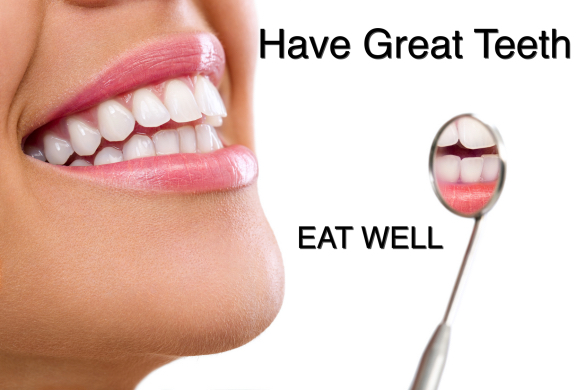
Healthy woman teethSo what are some nutritious choices that can help support dental health?
It’s recommended that we consciously adjust our modern diet to be more similar to those traditional diets that have been observed to create robust bones and teeth. This will not only help us have children with naturally well-formed smiles, but also help prevent and even re-mineralize dental cavities in adults.
Consume more minerals from whole foods, not supplements. Foods high in magnesium include pumpkin seeds, brazil nuts, caviar and tomatoes. Excellent sources of zinc include oysters, ground beef and liver. Calcium is best absorbed from leafy greens and bone-in fish, such as canned salmon or sardines.
Consume more fat-soluble vitamins (A, D, E and K). These work synergistically to prevent infection, support growth and repair, and ensure the minerals you’ve consumed are used correctly within the body’s systems. Liver, fish, shellfish, aged cheese, grass-fed butter, mushrooms and sunflower seeds are some recommended foods to add in. It should go without saying that consuming fat is also necessary for the absorption of these fat-soluble vitamins.
Consume gluten-free grains, legumes, nuts and seeds that have been prepared in such a way that phytic acid levels are reduced. This normally involves soaking and sprouting.
It’s never too late to start improving dental health with improved nutrition. You might even be able to prevent your next dentist visit by encouraging your teeth to re-mineralize naturally with these pieces of traditional wisdom.
—The Alternative Daily

General Mills Drops Artificial Colors and Flavors from Cereals

Giant food conglomerate General Mills recently made an announcement that by the year 2017, all of its cereals will be free of artificial colors and flavors.
This is great news, considering so many of these cereals are marketed to children, and these ingredients have been shown time and time again to have serious potential hazards.
However, before you celebrate that artificial dye-free box of Trix that’s right around the corner, take note that just because these ingredients will be replaced doesn’t mean the cereals will be healthy or safe to eat — for children or adults.

According to General Mills spokespeople, 90 percent of the brand’s cereals will be free of artificial colors and flavors by the close of 2016. The rest will be free of the stuff by the end of 2017. Just a few of the cereals made by General Mills include Cheerios, Trix, Lucky Charms, Cocoa Puffs, Count Chocula, and Reese’s Puffs.
Certain cereals are proving trickier for the food manufacturers to “de-artificialize” than others. For example, Trix cereal will soon be sporting four colors instead of six. Lucky Charms, which contains an array of sugary colored marshmallows, is also proving a challenge.
As for the reason behind the shift away from artificial ingredients, the president of General Mills’ cereal division, Jim Murphy, stated:
“We’ve continued to listen to consumers who want to see more recognizable and familiar ingredients on the labels and challenged ourselves to remove barriers that prevent adults and children from enjoying our cereals.” Indeed, General Mills points to internal polls which state that 49 percent of US homes do not want artificial ingredients in their food.
As we have reported, artificial colorings are a health nightmare. A number of studies have linked these colorings to the potential for severe allergies, hyperactivity in children, and other behavioral changes. Some have even been linked to cancer in lab animals. It can safely be called an atrocity that these ingredients have remained in our children’s food for this long.
The truly good news to be gleaned from General Mills’ announcement is that major food corporations are listening — finally listening — to the public’s demand for both transparency and healthier ingredients.
The company has also announced that its manufacturers are to rid their products of trans fats by 2018 — another encouraging move. Other major food corporations, including Nestlé, Pizza Hut, and Taco Bell, have also announced plans to end their use of artificial ingredients.
General MillsThe bad news? As we’ve said before, a processed food is still a processed food. Even without the artificial stuff, these foods are made in large factories, with no love, and with a high risk of contamination. They will also continue to be made with cheap ingredients, many of which are unhealthy, and contain tons of sugar. Many will still contain various preservatives.
On top of that, so-called “natural flavors” are sometimes even more ick-inducing than artificial ones — and have often been so chemically processed that they do not resemble anything found in nature at all.
Yes, the major food corporations are trying — but they are trying to win back sales, not to truly be healthy. If you want to get your morning — and your kids’ morning — started off right, begin with a healthy breakfast of whole, fresh ingredients from the Earth — not something poured out of a box.
-The Alternative Daily

Antibiotic-Resistant Intestinal Sickness Cases Are Growing

Shigellosis, a drug-resistant intestinal illness, is sweeping its way across the U.S. and has infected 243 people throughout 32 states, as well as Puerto Rico since May 2014.
Reducing antibiotic overuse
Officials from the U.S. Centers for Disease Control and Prevention (CDC) are recommending a reduction in the antibiotic treatment of milder forms of shigellosis, fearing we could end up with large outbreaks.
In the past, antibiotic-resistant forms of Shigella, the bacteria that leads to the development of shigellosis, have been rare in the U.S. However, international travelers have repeatedly introduced it back into the country. In fact, half the CDC-identified cases were associated with travelers who had spent time in the Dominican Republic and India.

Because shigellosis causes painful episodes of bloody or watery diarrhea, fever, and abdominal pain, many people seek to treat it immediately with antibiotics. Since it is usually treated with a drug called ciprofloxacin, now that medicine is losing effectiveness. Compounding the problem is the fact that shigellosis is already resistant to several other antibiotics used in the U.S.
Shigellosis is easily spread
As explained in a statement by CDC Director Tom Frieden, “Drug-resistant infections are harder to treat and because Shigella spreads so easily between people, the potential for more – and larger – outbreaks is a real concern. We’re moving quickly to implement a national strategy to curb antibiotic resistance because we can’t take for granted that we’ll always have the drugs we need to fight common infections.”
Shigellosis is quickly spread from one person to another by food, and also by the use of recreational water like pools. While it does generally resolve itself within a week, it can be painful to endure.
Developing drug resistance
antibioticBacteria like Shigella begin to develop resistance to antibiotics when they come into contact with doses that are not high enough to kill them. This allows the bacteria to adapt itself for survival and then passes along that resistance to later generations.
While officials are not exactly sure why drug-resistant Shigella has become such a growing problem in the U.S., it is most likely due to people who were overprescribed medication unnecessarily and then stopped taking it before the full course was finished.
Shigellosis clusters in the U.S.
Sizeable clusters of the antibiotic-resistant shigellosis have been found in California, Massachusetts, and Pennsylvania. Outside of the cases identified involving international travelers, there are also domestic clusters that are starting to emerge.
The San Francisco Department of Public Health has recorded 95 cases of the drug-resistant illness so far. Out of those 95 cases, half of them involve homeless people or people who live in single occupancy hotel rooms.
An ounce of prevention
The best way to protect yourself, as with most things, is through frequent and thorough hand washing with soap and water. If you travel abroad, it is best to drink fluids directly from the sealed containers they came in. Likewise, be sure to eat hot foods from the sealed containers they were packaged in as well.
—The Alternative Daily

Syphilis Infection Rates Are on the Rise

According to the U.S. Centers for Disease Control and Prevention (CDC), data shows that between 2012 and 2013, incidents of primary and secondary syphilis infections increased by 10 percent.
Those figures are twice as high as they were for 2001. The highest concentrations of syphilis infections are being found in Baltimore, Los Angeles, Portland, Atlanta, Miami, Detroit, Orlando, San Diego, San Antonio, and San Francisco.
Cases of infection in the San Francisco Bay Area doubled from 438 in 2009 to 814 in 2013. Not only did cases increase by 32 percent between 2011 and 2014, but in the last few months up to 15 cases of ocular syphilis were reported. Ocular syphilis is a very serious complication that can arise when the disease is left untreated, and may ultimately lead to blindness. Cases of ocular syphilis have been found in California and Washington state according to an alert from the CDC. Most of these particular infections were found in HIV-positive men who had engaged in sex with men.
Easy to treat, but hard to detect
Syphilis can be spread by sexual contact or from a pregnant mother to her unborn fetus. Thankfully, it can be easily treated with antibiotics, but the problem lies in the detection of it. Because the early-stage symptom of syphilis is a sore, or chancre, that takes three weeks to appear, it may be undetected and spread to others in the meantime. Not to mention that symptoms can disappear for a while, and as a result some people may falsely assume it is gone. Syphilis has been a problem in poor countries for some time and has led to pregnancy complications numbering in the hundreds of thousands. However, the continuous rise in infections here in the U.S. is drawing real attention from concerned health officials.
syphilisUnprotected sex is an obvious culprit
Information from the CDC indicates that the percentage of men having unprotected anal intercourse with other men rose from 48 percent in 2005 to 57 percent in 2011. One theory health officials are looking at for the unexpected rise in cases could be that HIV-positive men are choosing to have unprotected sex with HIV-positive partners. This is called serosorting or seroadaptation.
“There are a number of people who are on networks disclosing their HIV status, which we support. And for those people, they are choosing to have condomless sex if both partners know that they have HIV,” said Jay Laudato, executive director of the Callen-Lorde Community Health Center. “That’s something that’s been happening for quite some time. And it absolutely does lead to increased STIs.”
Some people blame the presence of Truvada, a PrEP or pre-exposure prophylaxis, used as a prevention option for people that may be at a high risk of exposure to HIV. As explained by Michael Weinstein, president of the AIDS Healthcare Foundation, “The CDC’s ill-advised strategy of mass treatment with Truvada poses a significant risk to the condom culture, which while it has eroded, has still prevailed among gay men for three decades.”
“I think there’s a subtle message that condom use is not that important any longer,” said Weinstein.
—The Alternative Daily

The Importance of Darkness to Your Health

In ancient times, and throughout most of human history, night used to be truly dark, and thus ideal for sleeping. While it’s true, of course, that the sun still sets every evening, most of us are exposed to a barrage of artificial light sources all night long. As it turns out, this can spell trouble for our health.
Even for those people living in the country or in rural areas, where street lights, city lights, and passing headlights are not an issue, electronic devices are a staple in modern homes. A body of research shows that the rise in the use of electronics is linked to negative effects on our natural sleep cycle.
It is now estimated that about 40 percent of Americans sleep less than seven hours per night — and that’s not enough.
Don’t underestimate the dark According to the authors of a new study published by The Royal Society:
“Since the introduction of electric lighting, there has been inadequate light during the day inside buildings for a robust resetting of the human endogenous circadian rhythmicity, and too much light at night for a true dark to be detected; this results in circadian disruption and alters sleep/wake cycle, core body temperature, hormone regulation and release, and patterns of gene expression throughout the body.”
The “endogenous circadian rhythmicity,” often called simply “circadian rhythm,” of human beings is the body’s natural “clock,” or the set of processes that govern our sleep/wake cycles. Along with our sleep/wake cycles, circadian rhythm also dictates many other bodily processes, such as our body temperature, our hunger cycles, and our levels of energy.
So, how important is darkness to this cycle? It is crucial. When it gets dark, the body naturally produces more of the hormone melatonin, which signals to the body that it is time to sleep. When the sun comes up, melatonin levels lower, and the body is signaled to awaken.
However, when our darkness is compromised — either through artificial lighting, sleeping during the day due to a nigh-shift schedule, or living in a home that does not get a lot of natural light or darkness contrasts (such as a basement apartment), the body’s production of melatonin is compromised as well. This may lead to some potentially serious health issues, especially over time.
A good night’s sleep is crucial to good health
We all know that we just plain don’t feel good when we don’t get enough sleep. If we get less than that sweet zone of seven to eight hours, we find ourselves groggy, irritable, and not able to think clearly. If we pull an all-nighter, it’s not uncommon to experience notable decreases in cognition, shaking hands, and altered mood. Sometimes, we may even experience visual or auditory hallucinations.
Just a few other symptoms that may come from short-term sleep deprivation are depression, binge-eating (more on that to come), facial wrinkles, skin blemishes such as acne, and decreased sex drive. Chronic sleep deprivation has been linked to some very serious disorders: including an increased risk of obesity, diabetes, heart disease, fibromyalgia, stroke, Alzheimer’s disease, and cancer.
So, how much sleep does one have to lose to suffer serious effects beyond a brain fog? A recent study shows that losing as little as 30 minutes of sleep per night each weekday may increase one’s risk of type 2 diabetes, as well as obesity.
For this study, researchers analyzed the sleep habits of 522 individuals, who were instructed to keep a sleep diary each day for one year. The researchers found that after the 12-month period,”for every 30 minutes of weekday sleep debt at baseline, the risk of obesity and insulin resistance was significantly increased by 17 percent and 39 percent, respectively.”
Another study, published in 2014 in the journal Neurology, linked less-than-adequate sleep with increases in brain shrinking, especially in individuals over the age of 60. On these results, the study’s lead researcher, Claire Sexton of the University of Oxford, wrote:
“We found that sleep difficulties (for example, trouble falling asleep, waking up during the night, or waking up too early) were associated with an increased rate of decline in brain volume over 3 [to] 5 years. Many factors have previously been linked with the rate of change in brain volume over time — including physical activity, blood pressure and cholesterol levels. Our study indicates that sleep is also an important factor.”
The study authors added:
“Poor sleep quality may be a cause or a consequence of brain atrophy, and future studies examining the effect of interventions that improve sleep quality on rates of atrophy may hold key insights into the direction of this relationship.”
The link between sleep and memory
A recent study performed at Brandeis University in Massachusetts tested the brains of Drosophila flies, which are sometimes used by researchers because of their simple organ system structure, and its relationship to human systems. During their study, the researchers found that the same parts of the brain responsible for memory function also affected sleep.
On this relationship, Bethany Christmann, one of the study’s authors, stated:
“It’s almost as if that section of the mushroom body [a part of the Drosophila brain analogous to the hippocampus] were saying ‘hey, stay awake and learn this. Then, after a while, the DPM neurons start signaling to suppress that section, as if to say ‘you’re going to need sleep if you want to remember this later.'”
Christmann and her fellow researchers hope that this observation can help researchers better understand the relationship between memory and sleep in the human brain.
Lack of adequate sleep can also affect your weight
You may be wondering what the connection between lack of sleep and binge eating — which was mentioned above — is all about. It turns out that when lights are on, it not only lowers the body’s melatonin levels, but also its levels of leptin. This can lead to midnight cravings, especially for unhealthy foods.
On the subject, the authors of a 2004 study published in the Annals of Internal Medicine wrote:
“Sleep restriction was associated with average reductions in the anorexigenic hormone leptin, elevations in the orexigenic factor ghrelin, and increased hunger and appetite, especially for calorie-dense foods with high carbohydrate content.”
If you routinely binge-eat foods laden with refined carbohydrates, you can reasonably expect the pounds to pile on. It is especially unfortunate that wheat has been found to be highly addictive, which elevates the cravings even more.
Different kinds of light
darknessSo, we’ve established that darkness is essential for sleep — but do different types of light affect us differently? Absolutely. Research has shown that blue light — such as from the sun and fluorescent lights (think your tablet and cell phone) — keeps us awake the most.
On the other hand, red and yellow lights (from candlelight, and incandescent light bulbs) are naturally dimmer, and do not affect circadian rhythms as severely as blue light. While darkness in the bedroom is always best when trying to sleep, if you have alarm clocks or hallway night lights, you may want to keep them in this spectrum.
Getting back into the natural rhythm
How do we get back in line with our natural circadian rhythms? Here are a few tips to consider:
Take a camping trip! Being away from artificial lights, even for a couple days, can have an immensely positive effect — as long as you don’t take your electronics with you! A 2013 study published in the journal Current Biology studies this effect, and found:
“Electrical lighting and the constructed environment is associated with reduced exposure to sunlight during the day, increased light exposure after sunset, and a delayed timing of the circadian clock as compared to a summer natural 14 hr 40 min: 9 hr 20 min light-dark cycle camping. Furthermore, we find that after exposure to only natural light, the internal circadian clock synchronizes to solar time.”
Make sure your bedroom is as dark as possible. You may want to experiment with curtains, window shades, or even an eye shade. Keep electronic devices out of the bedroom — they’ll do nothing but keep you awake.
Go to bed half an hour earlier. As it takes most people some time to fall asleep, giving yourself an extra window to make sure you get a full seven hours actually snoozing is key.
Turn down the heat. Sleeping in a cooler bedroom (below 70 degrees F) is linked to promoting restful sleep. Plus, it may help to activate brown fat, a metabolically active type of fat that actually increases your body’s rate of calorie-burning.
Make sure your sleep position isn’t affecting your snoozing time — check out our article and see if your preferred position is working for or against you.
There’s an app for that. Check out these nifty sleep apps that have been developed for the singular purpose of promoting quality sleep!
Above all, don’t forget to turn off the lights at night — and get out of the city once in a while — it’ll do your mind and body some serious good! Nature is the ultimate healer.
—The Alternative Daily

12 Reasons to Eat Popcorn Daily

It’s summertime, and sweet corn will soon be ready for harvest. One of our absolute favorite ways to enjoy this delicious veggie is to whip up a bowl of freshly-popped, organic popcorn. Now, some of you may be confused by the notion of popcorn as a health food — but that’s probably because you’ve likely never had the real thing!
Corn, which can be considered both a vegetable and a grain, has a rich history dating back to ancient times. It was a staple in the Aztec, Mayan, and Inca civilizations — to name just a few of the oldest and most famous. Corn comes in many colors, including white, yellow, black, and red, but most these days are white (which is sweeter) or yellow.
When kernels are heated in oil, magic happens, and the resulting popcorn has been enjoyed for centuries — not only for its flavor, but also for its nutritional value.
12 reasons to eat popcorn: Corn is high in fiber, which helps with digestive regularity, keeps you feeling full throughout the day, is crucial for a healthy heart, and may even help to protect against colon cancer. Because of its high fiber content, eating popcorn may help to promote healthy gut bacteria — which are essential for not only digestion, but also for a healthy immune system.
Yellow corn is rich in carotenoid antioxidants, including lutein and zeaxanthin, which not only help to protect eye health, and may guard against age-related macular degeneration, but they also work to combat system-wide inflammation, which may underlie a number of chronic diseases.
Corn is rich in B-vitamins, including vitamin B3, B6, folate, and pantothenic acid. B-vitamins are essential to regulating bodily processes across multiple systems. Just two examples of these are the production of energy and the metabolism of various nutrients.
Vitamin B3, also known as niacin, has been studied for its potential to help naturally ease depression, making popcorn a “comfort food” in the literal sense.
Corn contains phosphorus, a mineral that aids in supporting healthy bone function, as well as the function of many types of cells throughout the body.
Manganese, another mineral found in corn, not only supports healthy bones, it also plays a part in regulating blood sugar, and is instrumental in promoting healthy skin.
Corn contains ferulic acid, which is linked to potentially killing certain kinds of tumor cells.
Munching on a bowl of organic popcorn provides a great alternative to other less-healthy snacks, and because it is high in fiber, may reduce cravings for these snacks, as well.
Organic corn is a wonderful gluten-free grain choice.
Adorning your popcorn with organic grass-fed butter, and unrefined sea salt also gives you the benefits of these two important foods.
It’s just plain delicious!
Why it’s important to choose organic corn
When making popcorn, the type of kernel you start with really does matter. Always look for organic popping corn, and make sure there are no additives (or any other ingredients, for that matter), on the ingredients list. If you can get your corn fresh from a local source, that’s all the better.
Why is choosing organic corn so important when it comes to popcorn, and corn in general? One reason is widespread genetic modification. In 2012, Monsanto released GMO sweet corn into the US food supply. Since there is still no mandatory labeling of GMOs in most of the United States, you may not know when you are eating it.
This corn, known as Bt (Bacillus thuringiensis) corn, is genetically modified to produce an insecticide to destroy pests when they ingest the corn. This insecticide is present in every part of the plant. Bt corn is also modified to be resistant to Roundup — the pesticide most commonly sprayed on cornfields. Roundup has recently been classified as a “probable human carcinogen.”
When Bt corn was first released, the public was assured that the Bt toxin would not make its way into the human digestive system. However, a 2011 study performed at the University of Sherbrooke Hospital Centre in Sherbrooke, Quebec tells a different story.
For the study, published in the journal Reproductive Toxicology, researchers tested the blood of 30 pregnant women, and 39 non-pregnant women. Frighteningly, traces of Bt toxin was found in 93 percent of the blood samples from the pregnant women, and in 80 percent of the umbilical cord blood samples of their babies. It was also found in 67 percent of the non-pregnant women’s blood samples.
The engineering of the Bt toxin into corn may also present a significant threat to the environment, and in fact, the entire food chain. A 2005 study published in the journal Molecular Ecology found that not only “targeted pests” were being harmed by the planting of Bt corn, the toxin also exposed other creatures on the food chain to the toxin. The study authors wrote:
“These data indicate that long-term exposure to insecticidal toxins occurs in the field. These levels of exposure should therefore be considered during future risk assessments of transgenic crops to nontarget herbivores and arthropod predators.”
Another study, published in 1999 in the journal Nature, found that the Bt toxin leaches from the modified plants into the soil. The authors of this study wrote:
“Bt corn is corn (Zea mays) that has been genetically modified to express insecticidal toxins derived from the bacterium Bacillus thuringiensis to kill lepidopteran pests feeding on these plants. Here we show that Bt toxin is released into the rhizosphere soil in root exudates from Bt corn.”
Unfortunately, today, Bt corn is widespread. It can be found among fresh corn, frozen and canned corn, within many processed products (especially those with high fructose corn syrup), and even in some innocent-looking roadside stands. This makes choosing organic corn of the utmost importance if you wish to avoid this toxin.
popcornThe type of oil you use matters (and the type of salt, too)
Aside from choosing organic corn, in order to make your popcorn as healthy as can be, you need to choose the right oil and salt. Stay away from highly processed oils, such as soybean oil, canola oil, and vegetable oil, which come under the guise of being healthy — they are anything but.
For just a few examples as to why, about 90 percent of canola oil is genetically modified. It also contains an unbalanced ratio of omega-6 to omega-3 fatty acids, potentially contributing to inflammation. Inflammation, left unchecked, can lead to a host of chronic illnesses, ranging from skin issues all the way through to cancers. On top of that, some canola oils have been found to contain harmful trans fats.
Soybean oil is also highly processed, and the oil is often extracted from the soybeans using commercial solvents such as hexane. This oil is often hydrogenated, which leads to the development of trans fats. Trans fats have been strongly linked to weight gain, inflammation, and metabolic syndrome.
The absolute best oil choice for making your homemade, organic popcorn is organic virgin coconut oil. This oil is loaded with health benefits and nourishes all of your body’s systems. Top your popcorn with organic grass-fed butter and a sprinkle of sea salt.
Sea salt is key because table salt is highly processed, and sometimes contains traces of chlorine and other chemicals. Yuck! Best to stick to the real, unrefined thing!
Whatever you do, stay away from microwave popcorn!
A lot of the reason that popcorn itself has gotten a bad wrap is likely due to microwave popcorn. While it’s certainly convenient, microwave popcorn is a health nightmare. For starters, there’s the artificial butter flavoring — a far cry from real butter. A study published in 2012 in the journal Chemical Research in Toxicology linked the artificial butter flavoring often used in microwave popcorn to a higher risk of developing Alzheimer’s disease.
The bags used to house microwave popcorn are often treated in Teflon, officially known as fluorotelomer. The chemicals used in this coating may combine and metabolize to form perfluorooctanoic acid (PFOA), which may be carcinogenic.
On top of that, the popcorn kernels used in microwave corn are often grown with the use of a series of pesticides — many of which may contain both neurotoxins and endocrine-disrupting chemicals — to name only a few potential poisons.
How to make your own super-healthy popcorn
So, what’s the secret to perfect, healthy popcorn? It’s simple! Start with organic popping corn, pop it on the stove using organic virgin coconut oil, then top with organic grass-fed butter and some unrefined sea salt, such as Himalayan salt. Voila! — a perfect snack! Check out our recent Alternative Daily Podcast where we talk about making the perfect popcorn!
Note: If you have blood sugar issues, make sure to check with your doctor first to determine how much popcorn is safe for your individual health as corn is a naturally starchy food. However, if you’ve got the medical go-ahead, enjoy!
-The Alternative Daily
Job Posting - CFO/Vice President of Finance